

How To Create A Small Wildlife Pond
How to make a mini wildlife pond
April 19th, 2015 Posted In: Wildlife & eco
A mini wildlife pond will help wildlife in your garden. Water is essential for all creatures.
And helping wildlife is part of being an environmentally responsible gardener.
But how big does a pond have to be?
The Wildlife Trust says that you should have a minimum of 4-5 square metres of water, which would be a pond about 6ft across.
But the RSPB says that any water is helpful. Even a washing-up bowl is big enough to be a wildlife pond.
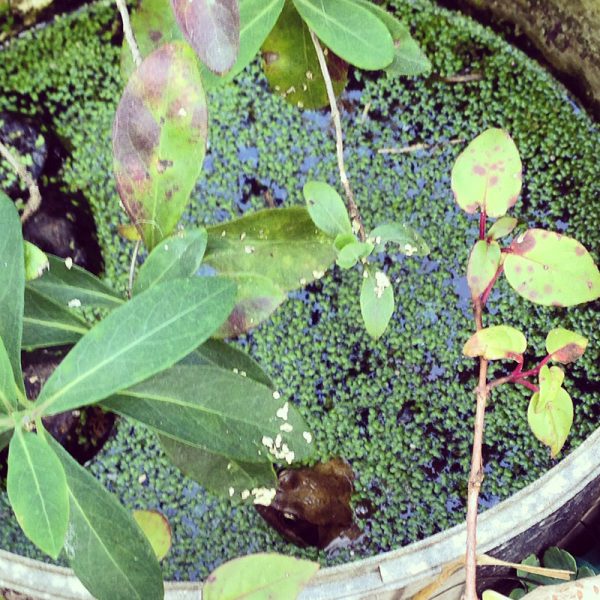
And the wildlife themselves seem to agree. In wildlife supporters Ian and Mo Parker's garden, I saw a plastic bucket that had filled with rainwater. A frog has adopted it. Ian popped a couple of rocks in there, to help Froggy and his friends get in and out. He says it has been Froggy's little mansion ever since.
No time to read now? Pin this for later…
And if you'd rather watch a video than read a post, the make a mini wildlife pond video is here.
How to make the perfect mini-pond
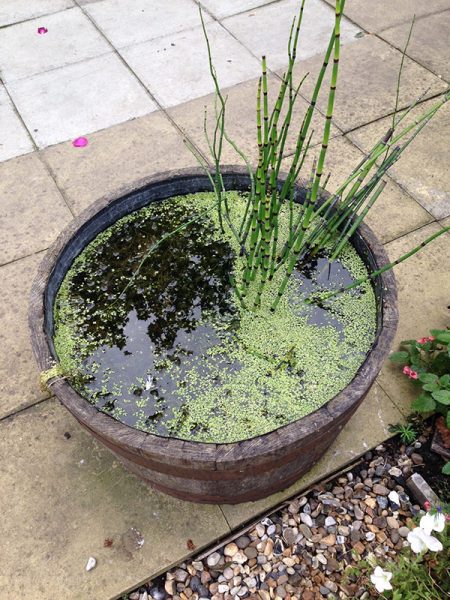
I bought a half oak barrel to use as a mini wildlife pond. You can buy them on Amazon here. I'm an Amazon affiliate, see disclosure.
It took me six months to find out how to make a mini wildlife pond properly.
The first thing I discovered is that oak barrels are not ideal for this purpose. Their high sides mean that wee beasties have trouble getting in and out of it.
Luckily, however, our terrace is stepped down from the garden, so the top of the oak barrel is accessible from one of the beds. You can also build access up around a high sided mini pond with pots of plants or even bricks.

Nothing else seemed simple, however. I initially felt overwhelmed by the amount you need to know.
Where to place your mini wildlife pond
Ponds must be in sunlight… but not such bright sunlight that the water will get too hot in a very small area.
Some people advise making sure that there is plenty of over-hanging vegetation for wee beasties to shelter in. Others say not to put ponds under trees or plants that shed their leaves.
I have been told that I need pond liners with different levels because aquatic plants need to be planted at different depths. Some people also advise adding a fountain or pond pump to keep the water moving.
You need certain plants in your mini-pond.
Firstly, you need oxygenating plants. You also need plants that stick up, such as irises or equisetum, so that young dragonflies can crawl up them.
Is there such a thing as a simple wildlife pond?
I read The Urban Wildlife Gardener by Emma Hardy. It has good, sensible advice for 'miniature ponds', as well as other aspects of wildlife gardening suitable for middle-sized gardens.
Emma has had a mini wildlife pond in an old galvanized washing tub for several years. It's attracted various kinds of insects and toads.
Remember access to a mini wildlife pond
Like my oak barrel, her tub is high, too. She suggests placing stones or bricks inside, so that creatures can climb out. And to help them get in, arrange different levels of pots around the mini-pond container.
Her advice also includes choosing a container that is 'water-tight, frost-proof and clean.'
Oh dear, that reminds me that I was told that oak barrels once used for whisky might still have chemicals that might leach into the water….I am beginning to think I should call this post 'How Not To Make a Mini Wildlife Pond.'
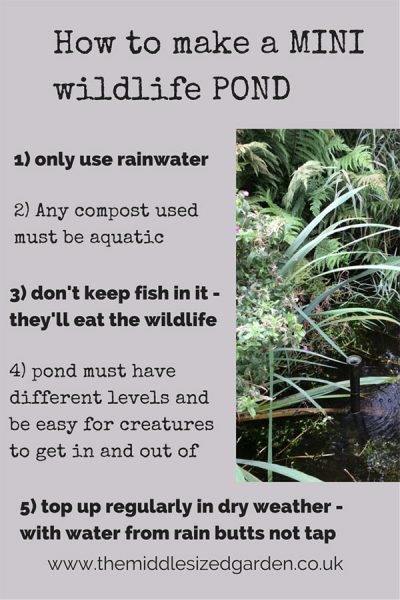
The basic points are:
It was time to stop agonising over it and Just Do It. The local garden centre stocked a trio of wildlife pond plants in a handy kidney-shaped tub.
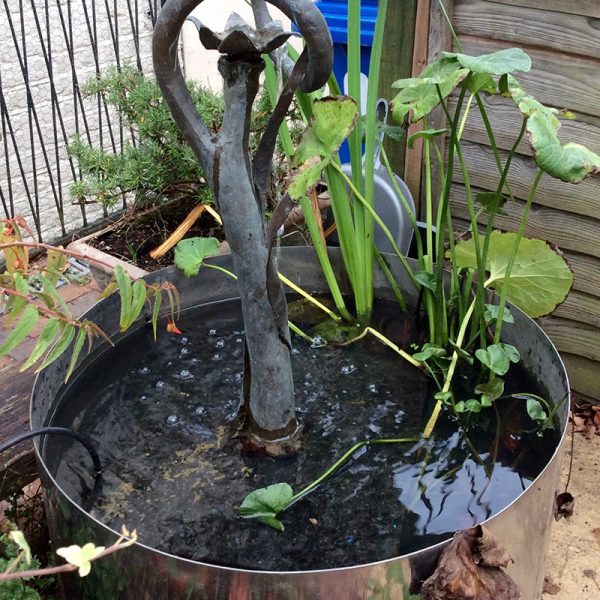
I also bought oxygenating plants. These are small plants that look like freshwater seaweed and have little weights attached. You just throw the oxygenating plant in the barrel.
The three wildlife plants came in their own basket and didn't need more soil or compost. I balanced them on bricks to bring their height up. If you do need more soil or compost, you must use aquatic compost, not ordinary soil or compost.
Gravel, too, should be labelled as suitable for ponds.
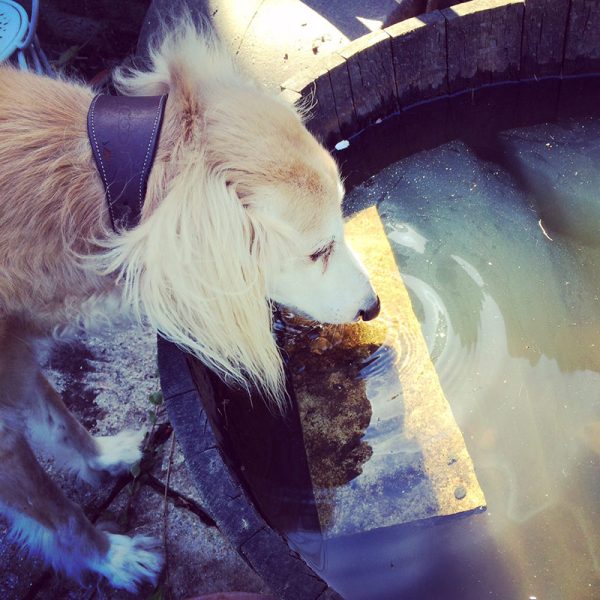
I am concerned that the pond is in too shady an area, but it has nothing directly hanging over it. And I've found a piece of flagstone to balance on more bricks to create a platform for birds to stand on.

But don't try to stock your pond…
Next – you need to get the wildlife into the pond. Asking other people for frogspawn, apparently, could transfer disease from one area to another.
Don't have fish as they will eat the eggs and larvae…I'd no idea that creating a mini wildlife pond could be such an anxiety-inducing activity.
However, most people report that once you've built a wildlife pond, the wildlife find it quickly.
One important mini wildlife pond warning…
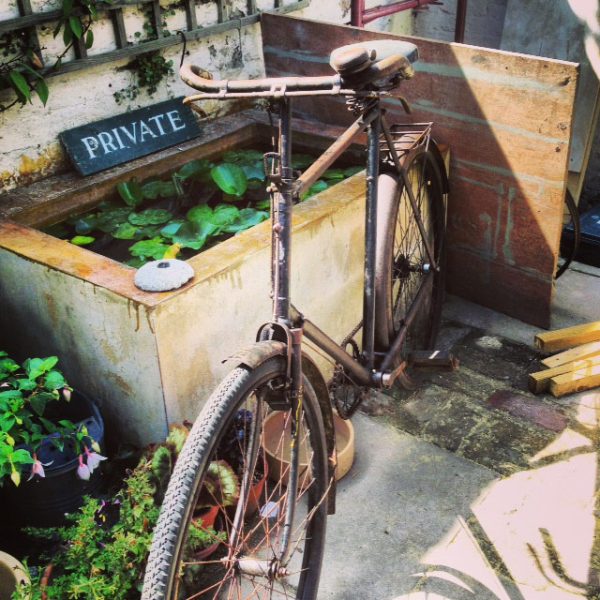
Don't forget that babies or toddlers can drown in a few inches of water. Protect them from the pond.
We now peer at the barrel pond on an hourly basis to see if wildlife are attracted to it. So far…I've seen one little insect scudding across the surface. I think it was a mosquito….
More help for wildlife in small gardens
Even a small lawn can be turned into a mini-meadow. This looks wonderful for months at a time, and helps pollinating insects. And it's easy – but not as simple as just letting your grass grow. See here to find out how to create a beautiful mini-meadow garden.
If you'd like more self-seeded plants or wildflowers in your garden, read this post listing 25 brilliant self-seeded plants to save you time and money.
Give your garden a wildlife-friendly audit by checking What Makes a Good Wildlife Garden. You need to provide food, access, shelter and water.
But it is really easy, provided you know what the wildlife needs. There's more advice in 12 easy ways to help wildlife in your garden.
And did you know that butterflies are a good indicator of how healthy your garden environment is? Create a garden for butterflies, and you'll help other wildlife. See Why You Need a Butterfly Garden – and How to Plant It.
And don't worry about where the wildlife will come from
They will find you if you have what they need!
Finally, do you worry about light pollution? If you're concerned that having Christmas lights in your garden in winter will disturb or disorientate wildlife, here are some wildlife-friendly tips for decorating your Christmas garden!
And if you provide water in your garden, you'll make a big difference to birds, frogs and all other wildlife. If you've got room for a bigger pond, then there are some lovely ideas for garden ponds here.
Shop my favourite sustainable gardening products
I'm often asked for recommendations (garden tools, books etc). So I've put together some lists of the gardening products I use on The Middlesized Garden Amazon store.
And I've included some of the products I use for more sustainable gardening. I'd always recommend, for example, using the largest water butt you can fit in or afford. Smaller water butts run out more quickly and there are some good slimline water butts now. There are also recyclable pots for seedlings, biodegradable twine, wooden plant labels, bug hotels and more. See My Fave Sustainable Gardening Products.
And read award-winning journalist and author Kate Bradbury's book for the Wildlife Trusts called Wildlife Gardening for Everyone and Everything.
Pin to remember how to make a mini wildlife pond
We often cover wildlife-friendly and sustainable gardening on the Middlesized Garden. So if you'd like a free weekly email with gardening tips, ideas and inspiration, see here.
Save
Save
Save
Save
Save
Save
Save
Save
Save
Save
Save

The Middlesized Garden is a participant in the Amazon Associates LLC, an affiliate advertising programme designed to provide a means for sites to earn advertising fees by advertising and linking to Amazon.co.uk
How To Create A Small Wildlife Pond
Source: https://www.themiddlesizedgarden.co.uk/how-to-make-a-mini-wildlife-pond/
Posted by: hubbardwhatefteld.blogspot.com
0 Response to "How To Create A Small Wildlife Pond"
Post a Comment